














Amsterdam is a rare year-round destination, its beauty anchored in seventeenth-century architecture that captivates even in the depths of winter. Whether during the height of summer or a holiday-lit December — when the cozy Dutch concept of gezelligheid prevails — the city remains irresistibly charming.
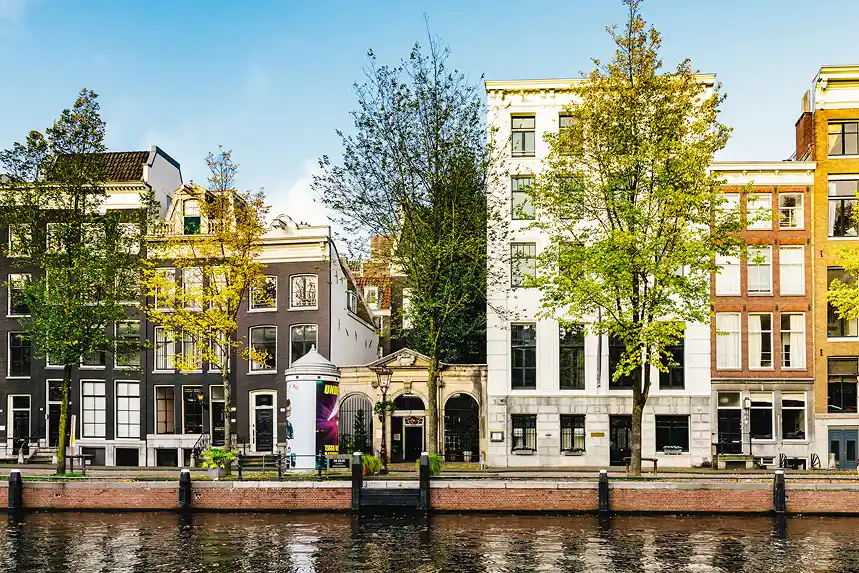
The Grachtengordel, or Canal Belt, with its narrow gabled houses, is one of the city's most desirable areas to stay. This is postcard-perfect Amsterdam, offering classic canal views and easy access to the city's best hidden boutiques. Here are five of the city's standout destinations: refined spaces to stay and savor world-class cuisine.
The Five-Star Dylan Amsterdam: Atelier Elegance and Poetic Refinement
Within the coveted Canal Belt is the De Negen Straatjes (The Nine Streets) neighborhood, where cobblestone roads traverse the city's grandest seventeenth-century canals. The Keizersgracht (Emperor's Canal) is arguably the most prestigious of the three main waterways that form the Nine Streets area.
Hidden behind a seventeenth-century stone gateway, the five-star boutique The Dylan Amsterdam offers suites that overlook the water, capturing the quintessential canal-house lifestyle. As part of the Leading Hotels of the World collection, the property feels both storied and exclusive. Climb a narrow half-spiral staircase, and you're ensconced in one of the Dylan's loft suites; exposed A-frame wooden beams stretch the length of the room, creating an atmosphere that feels like an upscale atelier, complete with a freestanding Vallone bathtub and expansive lounge area.
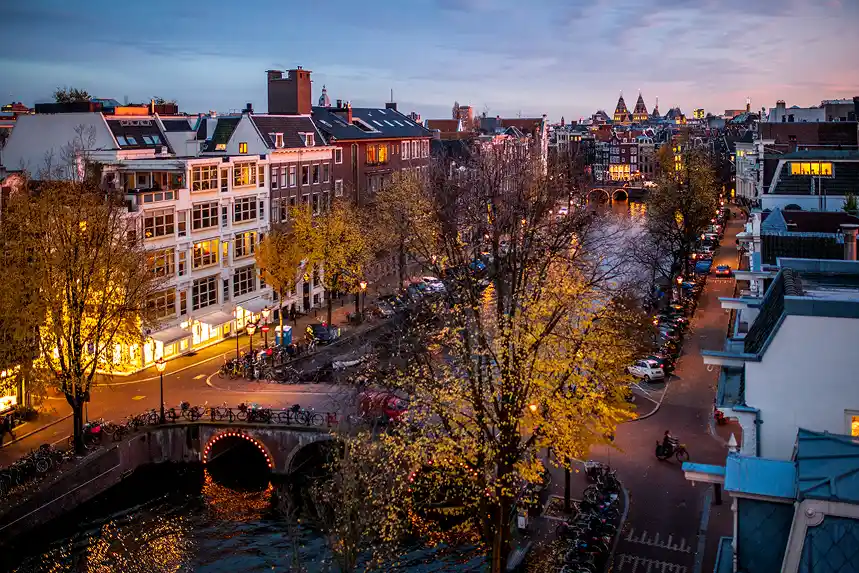
The Dylan Amsterdam — set on the Keizersgracht, Amsterdam's most prestigious canal
The Dylan Amsterdam offers nine distinct styles across its 41 rooms and suites, with half newly renovated alongside other key areas of the property. Among the rooms, the Loxura — inspired by the copper-colored butterfly — sports a handsome look with its bronzed mirrors and leather headboards detailed with luxury pearl shell. This room type surrounds the Dylan's garden space, lending a relaxed ambiance. In contrast, the modern sensibility of the Serendipity and Amber room types offers cleaner, more minimalist lines.
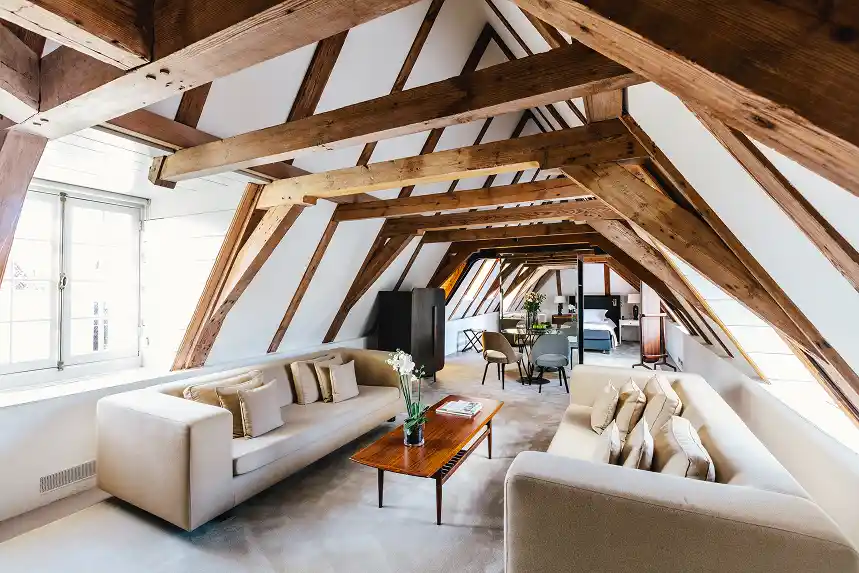
The Dylan Amsterdam's Luxury Loft Suite — garden view
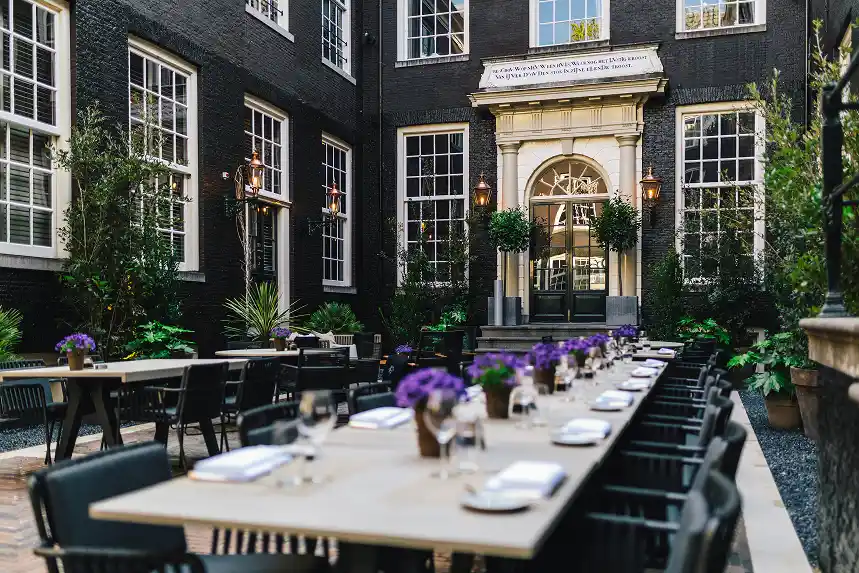
The Dylan Amsterdam's private garden courtyard
The Dylan Amsterdam's Historic 1600s Origins
The Dylan Amsterdam, with its entry lounges appointed with fireplaces and warm woods, dates to 1638 — the site of Amsterdam's first stone theater. Named after the Welsh poet Dylan Thomas, the hotel embodies the refined artistic essence of its origins. Here, it is as if time stopped in the Dutch Golden Age.
Just off the front lounge, the hotel's Bar Brasserie OCCO serves drinks and breakfast, its brick floor a grounding contrast to ceiling beams finished in black lacquer. Just beyond is the hotel's two-star Michelin Restaurant Vinkeles; the site was originally a bakery in the eighteenth century. A careful renovation retained vestiges of the shop: a brick wall is still lined with the original wood ovens used to bake rye bread more than 250 years ago.
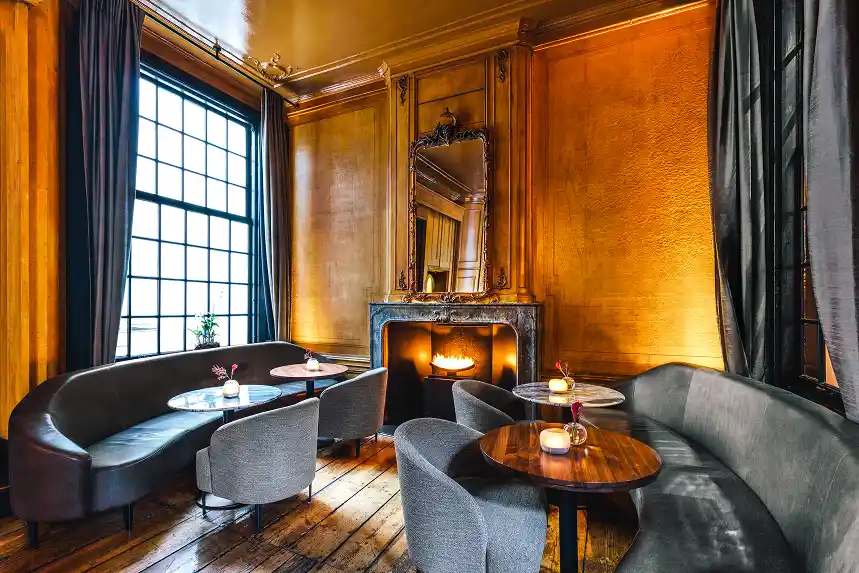
The Dylan Amsterdam's Bar Brasserie OCCO — exposed beams and warm lacquer
Executive Chef Jurgen van der Zalm has mastered the modern French cuisine menu for 15 years. Starters include sweetbread and Breton oysters, and main courses top out at Wagyu A5 "Nakayama," sirloin with bone marrow, shallot, egg yolk, rouennaise, and 10 grams of N25 Kaluga caviar. The powerhouse dish embodies an intense richness, with the Kaluga caviar's nutty, salty brine acting like a sophisticated seasoning.
Restaurant Vinkeles

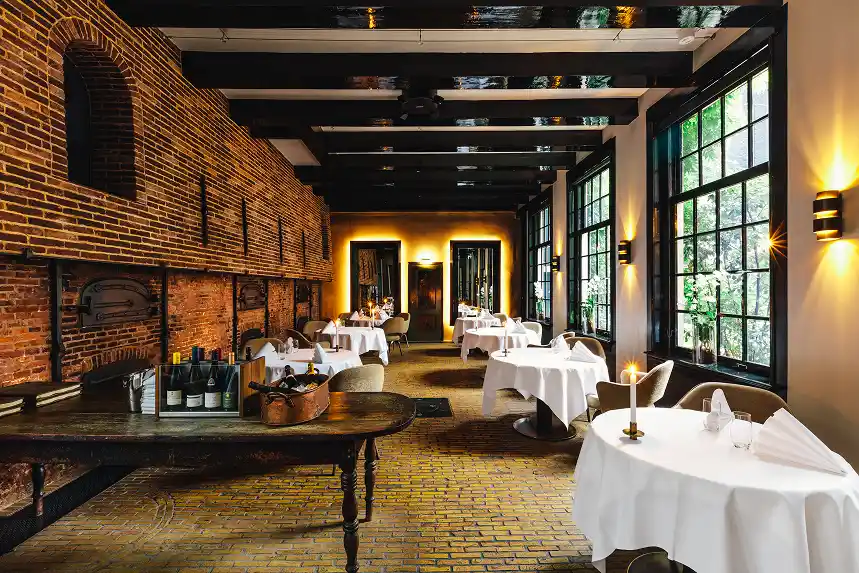

Restaurant Vinkeles — two Michelin stars, housed in an 18th-century bakery
"Here, it is as if time stopped in the Dutch Golden Age."
The Conservatorium: Neo-Gothic Grandeur Meets Modern Design
Nearby in the Museum Quarter, the Conservatorium Hotel is often described as the "five-star living room of Amsterdam," with a storied nineteenth-century musical heritage that is beautifully married to modern Italian design.
The hotel is set in the upscale Oud-Zuid district, a premier spot for culture lovers. Developed primarily in the late 19th century, the area's wide streets are lined with stately manors. The property is steps away from the Van Gogh Museum, the Rijksmuseum, and the Stedelijk Museum. The world-renowned Concertgebouw (Royal Concert Hall) is right across the street.
Constructed in 1897 as the Rijkspostspaarbank (a national savings bank), the Conservatorium has often been likened to Hogwarts from the Harry Potter stories. Neo-Gothic architecture reigns with soaring red-brick towers, arched windows, and steeply pitched roofs. The hotel's interior features grand hallways and quirky design elements that echo the exterior. You'll find many carved bees — a metaphor for hard work and saving when the building was a bank — along with various other animals hidden in the masonry.
The hotel honors its past as a music conservatory by playing classical music throughout its hallways. A massive, 20-meter-high glass-and-steel courtyard harbors a restaurant with Middle Eastern flair, currently being reconfigured by British chef Yotam Ottolenghi. Rooted in Middle Eastern and Mediterranean traditions, his menu will again incorporate flavors from Morocco, Tunisia, and Israel.
Many of the Conservatorium's 129 rooms are split-level duplexes with lofty ceilings, oversized windows, and exposed wooden beams. Guests have complimentary access to the Akasha Holistic Wellbeing Centre, an 11,000-square-foot underground spa with an indoor lap pool, a sauna, a Watsu pool, and a hammam.
All told, the Conservatorium feels like a vibrant community hub where locals and international guests mingle in the atrium for afternoon tea or business meetings. It is truly where Amsterdam meets.
The Conservatorium's Akasha Holistic Wellbeing Centre spans 11,000 square feet underground, featuring an indoor lap pool, sauna, Watsu pool, and a hammam — complimentary for all guests.
Modern Luxury Split Between Historic Landmarks
Just behind the Royal Palace, Marriott's W Amsterdam is a unique "two-sided" hotel experience, split between a pair of landmark buildings that stand directly across from each other on Spuistraat.
The W's 1908 neoclassical property, formerly the KAS Bank, is a more traditional, grand structure with high ceilings, sandstone, and marble. It epitomizes the city's financial heritage, broadcasting a sense of power and stability. Rooms here are more exclusive, luxurious, and tranquil, featuring higher ceilings, gold accents, and custom-made drink cabinetry.
Across the street, the Exchange Building, built in 1924, originally served as the Royal Dutch Post's communications center. Its concrete and brick architecture features prominent vertical piers — all inspired by Frank Lloyd Wright's Larkin Building in Buffalo, New York. This property is decidedly more urbane, cosmopolitan, and hip — the social heart of the W experience.
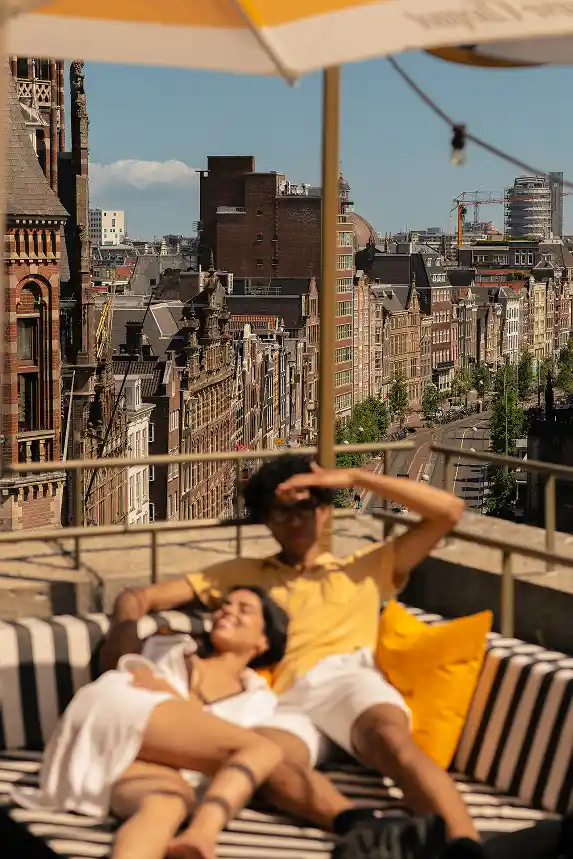
W Amsterdam rooftop lounge
The local art scene frequents the rooftop W Lounge, with its heated pool and incredible views of the Royal Palace. Back in the 1908 bank building, the W hotel's most talked-about amenity is the AWAY Spa, located in the building's former vaults. Entering through a four-ton steel vault door, the spa presents a moody black and gold theme, evoking the image of gold bars and the wealth once stored there.
Descending the stairs, hot cardamom-infused tea in hand, one enters an underground urban retreat outfitted with comfortable lounge areas. There's something forbidden about the luxurious space, as if its location is known only by Amsterdammers in the know. A cold plunge pool, sauna, steam room, and small pools surround the space.
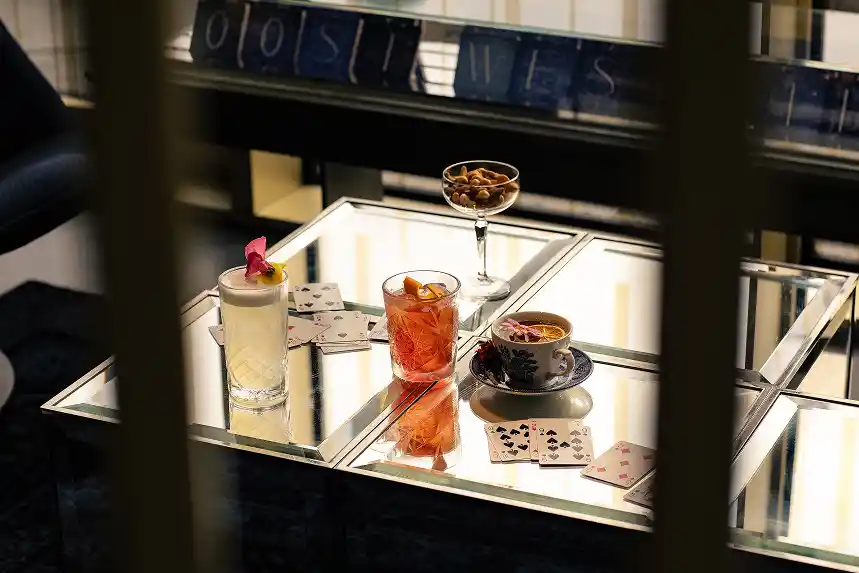
W Lounge — cocktail hour
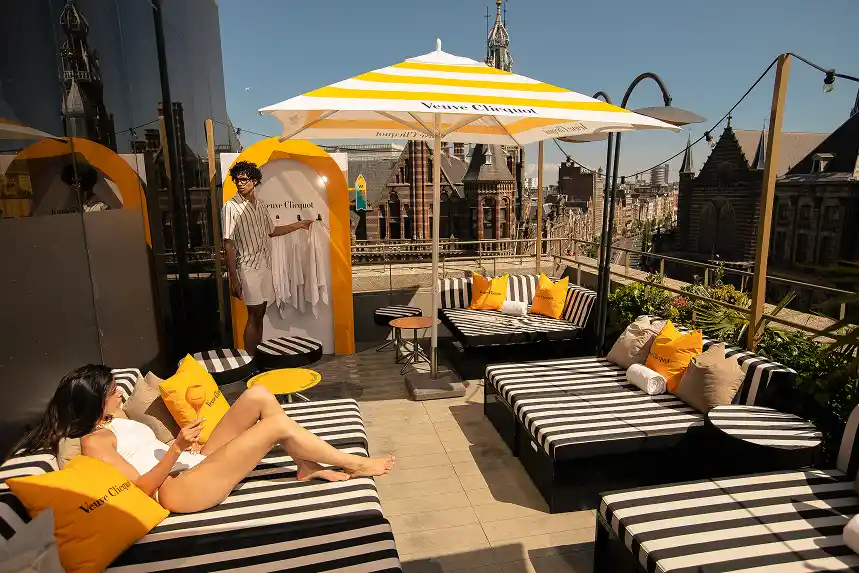
Rooftop hangout
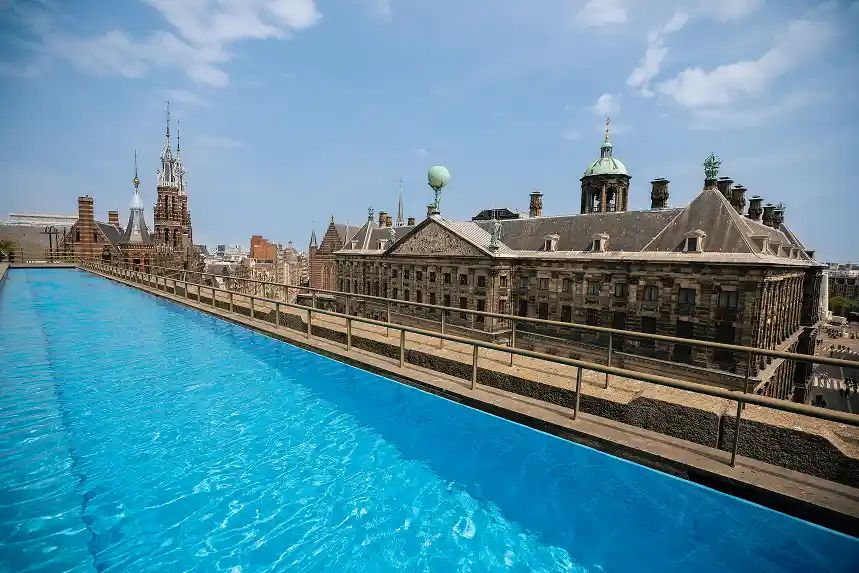
Rooftop pool — Royal Palace views
"There's something forbidden about the space, as if its location is known only by Amsterdammers in the know."
Amsterdam is Home to one of the World's Best Steakhouses
Often cited as the best steakhouse in the city (and there are several, including Argentinian varieties), the Midtown Grill is located in the Museum Quarter. The restaurant's eclectic wallpaper, plush seating, and warm lighting broadcast a welcoming feel. The eatery serves the finest steak cuts from around the world, complemented by a curated wine list.
Servers present a meat trolley to guests that displays everything from USDA-certified dry-aged American beef and locally sourced Dutch varieties to premium Japanese Wagyu, grade A5+. Seafood and vegetarian options are available.
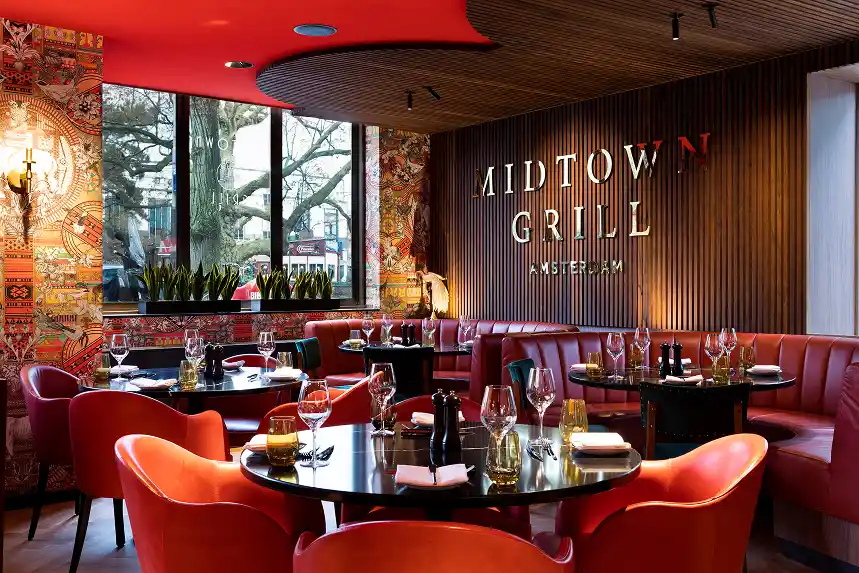
Midtown Grill — eclectic interior, plush seating

The knife ritual
What's popular: the Dutch Chateaubriand, the most tender and buttery cut of beef available — a dish for two. The USDA corn-fed rib eye and filet mignon are also frequently praised for their "cut-like-butter" texture.
Before the service begins, a collection of steak knives is presented to guests. Among the selections: KAI, one of the oldest and most prestigious of Japanese cutlery manufacturers, and a French Sabatier blade, a design that originated in Thiers, France, during the 19th century.

Midtown Grill — one of the 101 World's Best Steak Restaurants
The Midtown Grill ranks in the top ten of all restaurants in Amsterdam and has captured a spot on the 101 World's Best Steak Restaurants list.