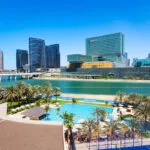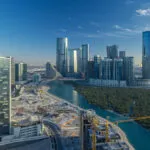

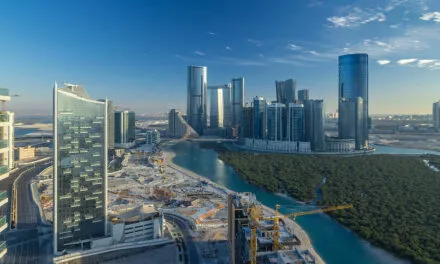





On December 11, the Guggenheim Abu Dhabi will finally open its doors after two decades of delays, redesigns, a global recession, and a pandemic. Frank Gehry, who died before seeing the project through, designed a striking building that the New York Times has called "a graceful tumble of giant plaster building blocks and translucent blue cones."
Picture ten sculptural cones climbing as high as 88 meters, nine wrapped in stainless steel mesh, one in onyx and glass, arranged around a central atrium.
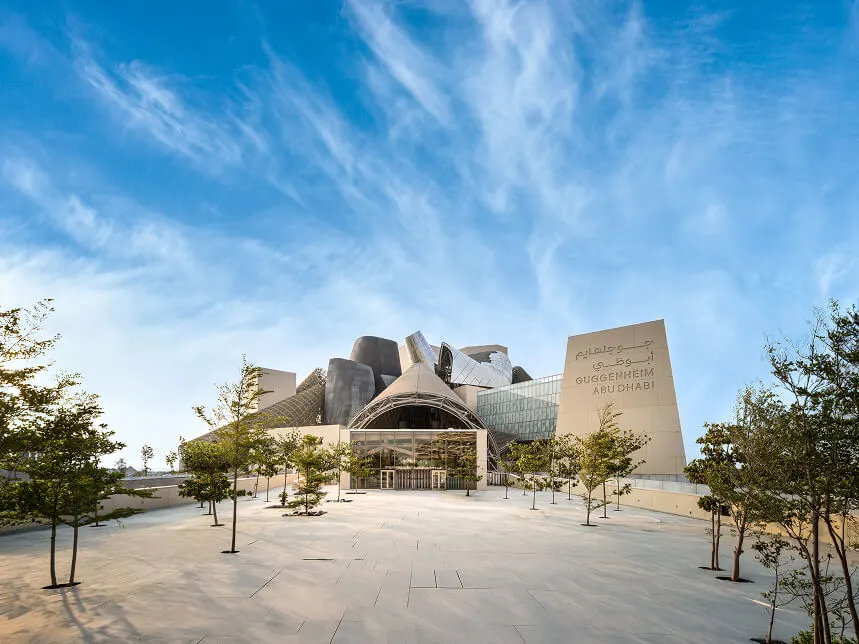
Guggenheim Abu Dhabi, designed by Frank Gehry
At 80,000 square meters, it will be the largest museum in the Guggenheim network. Thirty galleries will hold modern and contemporary art from the 1960s onward, organized not by chronology or geography but by theme — abstraction, popular culture, land, language, storytelling — a curatorial choice that's grown popular. The Los Angeles County Museum of Art's new David Geffen Galleries took a similar approach when it opened in April 2026.
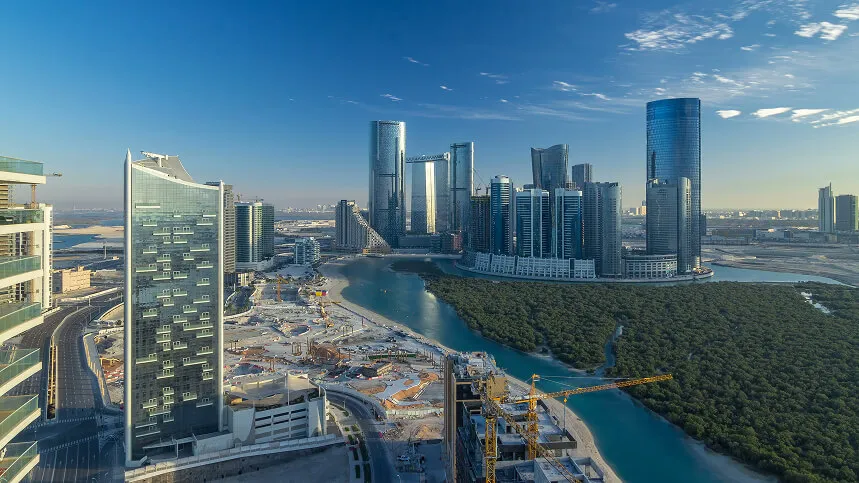
The Guggenheim—at the northwestern tip of Saadiyat Island—will be the top headline of the Gulf's cultural year. But there are other parts of the story.
A District Nears Completion
Saadiyat Island has spent 2025 and 2026 filling in the last blank spaces on its master plan. The Zayed National Museum opened on December 3, 2025, its five steel towers by Foster + Partners inspired by the shape of a falcon's wing. The institution is a roughly $680 million tribute to the UAE's founding father, Sheikh Zayed bin Sultan Al Nahyan. Inside, 300,000 years of regional history unfolds via artifacts like the Abu Dhabi Pearl, the world's oldest known natural pearl, and a full-scale reconstruction of a Bronze Age trading vessel.
Less than two weeks earlier, the Natural History Museum Abu Dhabi had opened alongside it, the largest natural history museum in the Middle East. Designed by the Dutch firm Mecanoo, the structure is built of box-like white concrete resembling natural eroded rock formations. Vegetation tumbles from terraces and rooftops. Among the museum's many treasures: a 67-million-year-old Tyrannosaurus rex skeleton bought for a then record-breaking $31.8 million.
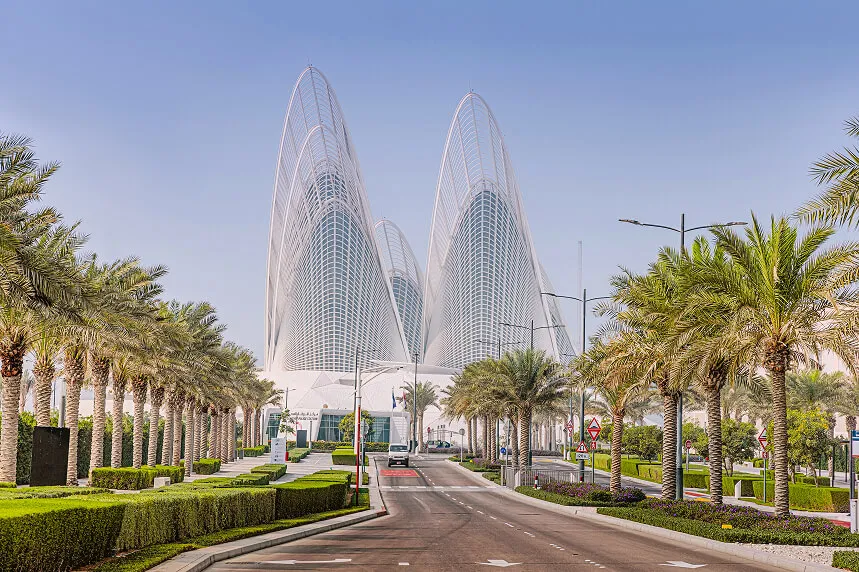
Zayed National Museum, by Foster + Partners
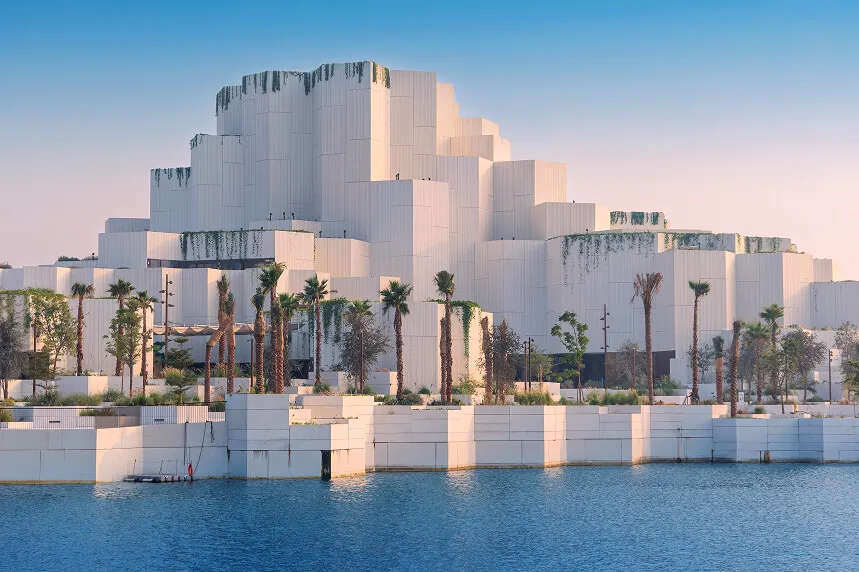
Natural History Museum Abu Dhabi, by Mecanoo
With those developments, Saadiyat has become one of the most concentrated assemblies of museums anywhere on earth. Louvre Abu Dhabi, which opened in 2017 after delays of its own, no longer looks like an outlier bet. Given years of progress, it has become the first move in the master plan.
Doha's Quieter Argument
If Abu Dhabi's strategy has been to import global names — Louvre, Guggenheim, Foster, Gehry — and build scale, Qatar made a different bet last November.
Lawh Wa Qalam: M. F. Husain Museum opened in Doha's Education City on November 28, 2025, as the world's first institution devoted entirely to Maqbool Fida Husain, the Indian modernist. Sometimes called his country's Picasso, the artist spent his final years in Qatar after threats over his depictions of Hindu deities forced him from India in 2006.
The museum's design is based on a sketch Husain drew himself in 2008. He conceived the museum as he might a painting—a blue building, a kind of canvas covered with blue tile, next to a white tower. The museum's Arabic name (Lawh Wa Qalam, or "Canvas and the Pen") is worked into the facade in Husain's own calligraphic hand.
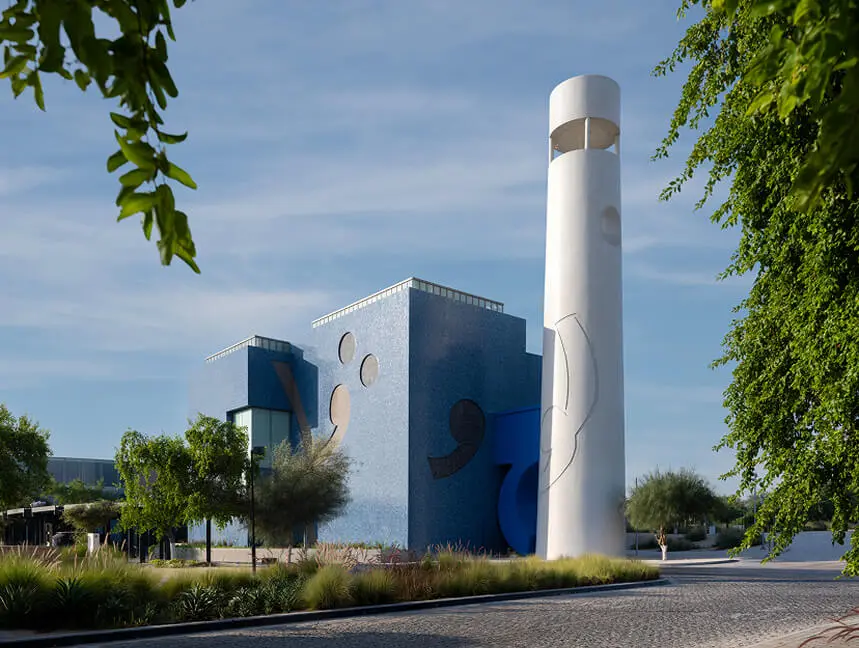
Lawh Wa Qalam: M. F. Husain Museum, Education City, Doha
The museum includes his paintings from the Arab Civilization series he made in exile and "Seeroo fi al-Ardh" ("Travel through the Earth"), his last major work, blended into the architecture as a piece of theater. The 20-minute multimedia installation is housed in a circular hall.
Where the Guggenheim has scale and import, Husain's museum is intimate, focusing on his biography. It's a chronicle of a single artist's late, difficult life. TIME named it one of the "World's Greatest Places of 2026," a recognition that had less to do with square footage than with the details the story tells.
"Where the Guggenheim has scale and import, Husain's museum is intimate, focusing on his biography."
What Comes After the Ribbon Cuttings
None of these projects exist apart from the region's economic ambitions.
Abu Dhabi has set a target of 39 million annual visitors by 2030, and its cultural infrastructure is being built as deliberate policy toward that goal. What makes 2025 and 2026 distinct is density — the compression of multiple flagship openings into a single eighteen-month window, all converging on Saadiyat and Education City, the massive 12-square-kilometer campus in Doha, Qatar—the home site for the Husain Museum. There, world-famous universities—including Georgetown, Carnegie Mellon and Texas A&M—have opened prestigious branch campuses.
The genuinely hard part starts after the Guggenheim Abu Dhabi opening on December 11. A building so anticipated will get attention regardless of what's inside it. But what will determine whether the institution becomes a real cultural force is what it acquires and exhibits in years to come; the museum has been building its holdings since 2009.
The new museums will be able to draw crowds. Whether they shape culture is a different question. What happens inside these buildings over the next several years will decide whether 2026 is remembered as a year that launched sustained artistic risk-taking, hopefully with the same seriousness as Husain's was.