



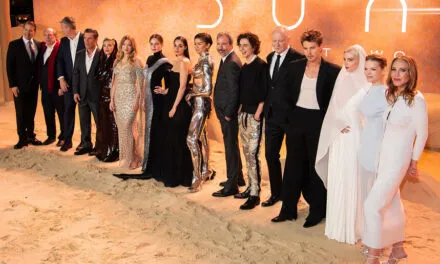


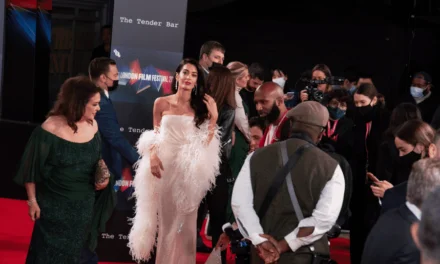
Since the early 2000s, Lebanon, with Beirut at its heart, has dominated the high-end fashion world with looks that stun on red carpets. Beirut's layered history — Phoenician, Ottoman, French — has given its designers something rare and sought after: a genuinely hybrid aesthetic that neither Europe nor America can replicate.
When Kristen Wiig glided across the red carpet at the 2026 Academy Awards in a meticulously sculpted Elie Saab silhouette, it wasn't a breakthrough moment. It was a demonstration of dominance — one more example of fashion mastery in a run that has lasted more than two decades.
Since the turn of the millennium, Lebanon, with Beirut as its creative heart, has redefined the outer limits of red-carpet glamour. What began as a series of show-stopping celebrity moments has become something more permanent: a genuine shift in where haute couture's center of gravity lies. Beirut's layered history — Phoenician, Ottoman, French — gave its designers something neither Europe nor America could manufacture: a hybrid aesthetic that is entirely their own.
The Craft That Cannot Be Rushed
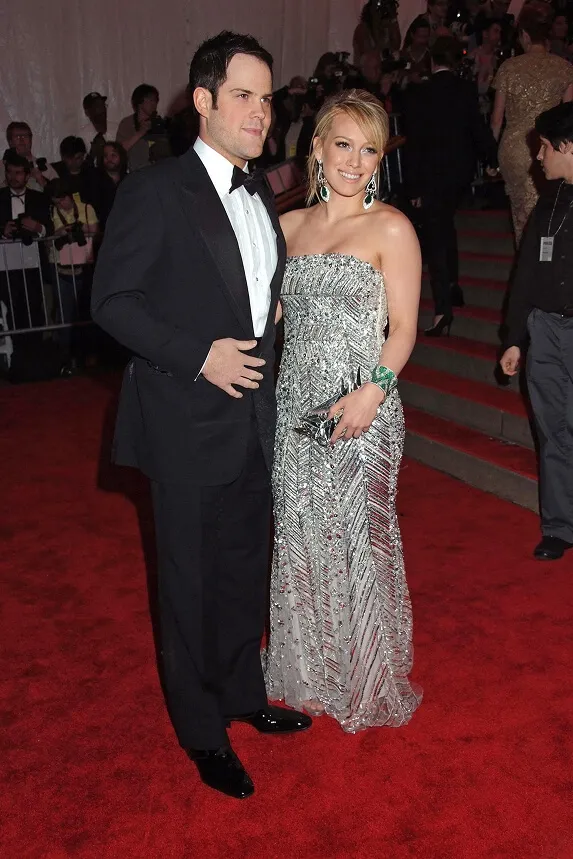
Hilary Duff in an Elie Saab gown, with Mike Comrie
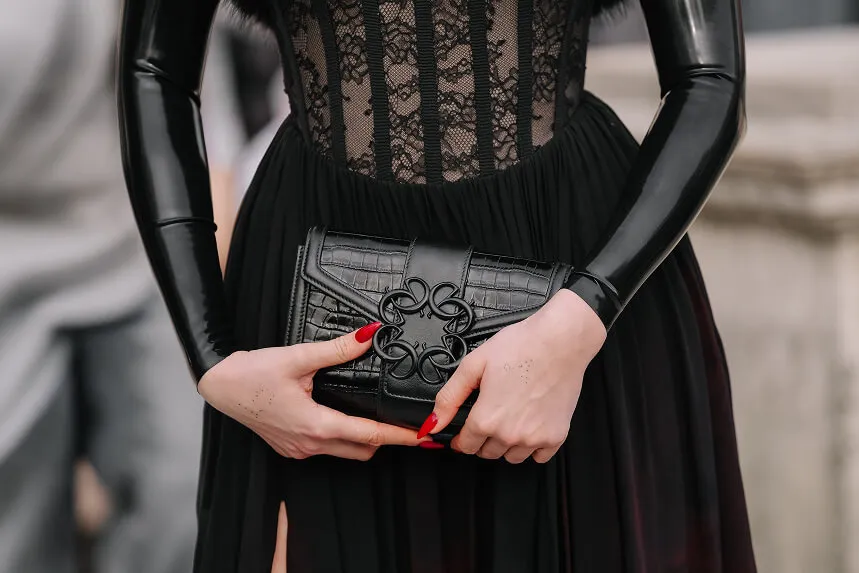
A newer wave of Middle Eastern fashion houses has built a reputation for producing weightless, intricately detailed evening wear defined by delicate surface work. Each garment is constructed through slow, exacting studio processes that rely on layered decoration applied entirely by hand, often requiring long periods of focused craftsmanship.
One of Zuhair Murad's most celebrated commissions, Sofia Vergara's custom bridal gown, took 1,657 hours to complete.
"The code of my collections will always remain the same," Murad has often said, referring to his luxury pairing of Western silhouettes with a Middle Eastern flair for ornamentation and embellishment. It is, he insists, not reinvention but a style that's been refined across generations.
Georges Hobeika, who opened his atelier in Beirut in 1995 and has been showing his collections in Paris during the city's official fashion week since 2001, occupies a similar register. His work has dressed Adele, Beyoncé, and Sheryl Lee Ralph, and his couture language — crystalline embellishments, airy chiffon, precisely cut to the female silhouette — is as recognizable as any European maison.
"The code of my collections will always remain the same — a luxury pairing of Western silhouettes with a Middle Eastern flair for ornamentation."
Red Carpets as Geopolitical Stages
In recent award seasons, Lebanese talents have been highly visible, including at the Academy Awards, the Golden Globes, and numerous other award ceremonies.
Here's the short list:
- The 98th Academy Awards in 2026 saw Kristen Wiig dressed by Elie Saab from his Spring/Summer 2026 collection. Marlee Matlin was dressed by Egyptian designer Marmar Halim.
- Beyoncé wore Georges Hobeika designs on multiple occasions, including couture looks connected to her Renaissance era appearances and high-profile fashion events.
- Andra Day and Molly Sims in Georges Chakra ensembles.
- At the SAGs, Kaitlyn Dever and Leighton Meester in Elie Saab.
- Also at the SAGs, Keri Russell in Zuhair Murad, wearing a black gown with a low neckline accented by rosette shoulder detailing.
- Tony Ward's Beirut atelier created looks for Hannah Waddingham for the SAG Awards, and Da'Vine Joy Randolph for the Governors Awards.
- At Cannes in 2025, striking Lebanese-designed looks were premiered by Georges Chakra, Zuhair Murad, Elie Saab and Rami Kadi.
The Elie Saab Dress That Started it All
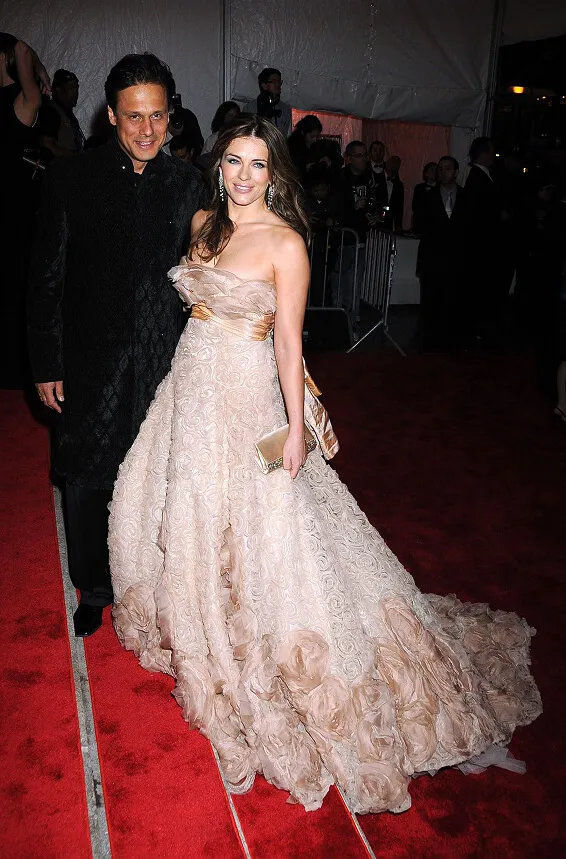
Elizabeth Hurley in an Elie Saab dress, with Arun Nayar
In the early 2000s, something in global fashion began to shift — not through anything shocking on runways, but through what was quietly showing up on red carpets. A much-hailed turning point came when Elie Saab dressed Halle Berry for the Oscars in 2002. The gown — intricate, sculpted, and built from exquisite couture embroidery — ended up being a sensation. After Berry's historic Best Actress win, the dress became part of the night's mythology, replayed endlessly in images that blurred celebrity, fashion, and the cultural moment.
After that, Saab's visibility didn't so much explode as accumulate. His work moved into a different circuit. No longer just couture salons, but the machinery of global celebrity culture, where clothing becomes shorthand for status, narrative, and image. Each appearance at an awards show or premiere added another layer, slowly embedding his aesthetic into what the world had begun to expect from red-carpet fashion.
Lebanese and broader Middle Eastern couture started appearing with regularity in spaces that once treated it as an exception. And over time, what had felt like a standout presence became part of standard expectations for global glamour.
Beirut as the Unlikely Capital of Couture
The ascent of Middle Eastern couture onto the global stage can be traced, notably, to Beirut at one of the city's darkest moments in its history. Elie Saab founded his atelier in 1982 as Lebanon was engulfed in civil war, leaning into the region's deep heritage of intricate craftsmanship and couture technique — all while violence unfolded and bombs dropped around him. Rather than abandoning the country, Saab expanded his operations in Beirut, creating jobs and continuity for artisans whose livelihoods had been shattered by the conflict.
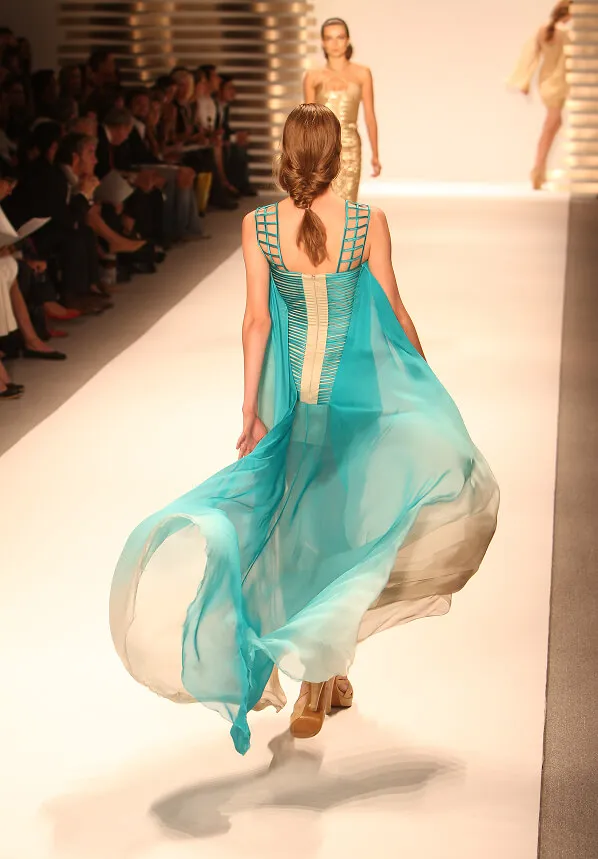
From a Georges Chakra collection
Among them were generations of skilled seamstresses, embroiderers, and bead workers, some living in damaged homes as they continued producing the meticulous handwork.
That trademark Lebanese stubbornness became a template. Couture has favored Beirut in a way that's unlike anywhere else in the world. The city birthed a design sensibility that includes Georges Chakra, Rabih Kayrouz, Zuhair Murad, and Georges Hobeika. Among the rising talent, according to Arab News: Hussein Bazaza, Sandra Mansour (a Saab protege), Racil, Cynthia Merhej, and Roni Helou.
Zuhair Murad, who launched his brand in 1997 and hit the world stage in 2001 at Paris Haute Couture Week, has described Beirut as a city where the past is always part of its wholly modern and forward-looking present, and where ancient architecture shares the street with sleek modern structures. His collections, he said in a CNN article, contain "a touch of the ancient with the modern at the same time." He draws specifically from the city's architectural heritage, noting that Beirut has absorbed traces of its multi-layered past, the fusion being what precisely "makes us very special."
"A touch of the ancient with the modern at the same time — that is what makes us very special."
Resilience as a Design Philosophy
In 2020, a blast at the Beirut port tore through large sections of the city, heavily impacting several of Lebanon's best-known couture ateliers, among them the houses of Elie Saab and Zuhair Murad. What followed revealed the resilience of the country's fashion industry. Saab and his staff resumed operations soon after the disaster, resuming the ready-to-wear collection that had been damaged after its Paris Fashion Week debut. His next couture presentation, titled "Beirut: The Sacred Source," was a reflection on Lebanon and its endurance. Murad also returned to Beirut in the aftermath, overseeing the rehabilitation of his fashion headquarters and continuing work from the ground up.
The ability to endure upheaval and channel it back into artistic output is inherent in Lebanese fashion design. In 2024, Sandra Mansour, who trained under Saab, told Arab News: "He has always had a deep understanding of what women want to feel when they wear a dress — powerful, elegant, and confident — and his attention to detail and craftsmanship is unmatched. That's what makes it timeless."
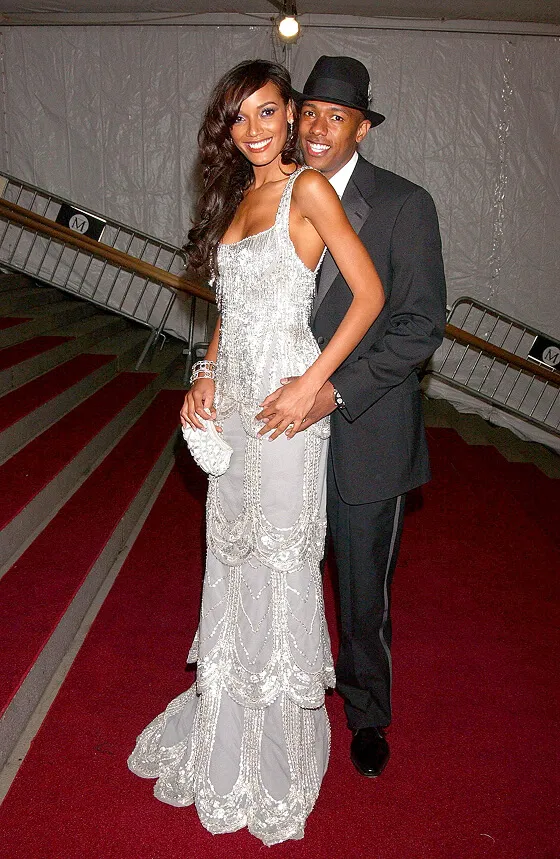
Selita Ebanks in a Zuhair Murad gown, with Nick Cannon
What Comes Next
The next generation is already arriving. Designers like Jean-Louis Sabaji, Rami Al-Ali, and Azzi & Osta are furthering Lebanon's influence, while Saudi Arabia and the UAE have begun producing their own couture voices. Social media has helped Arab designers reach global customers directly. Designers in Riyadh or Dubai are now highly visible to those in New York City or Madrid through social channels.
Middle Eastern couture's golden era is comprised of several markers: the culmination of years of technical mastery; cross-cultural influence; and a determination to succeed beyond the region's political and geographic constraints. Saab said it simply to The Hollywood Reporter: "The red carpet for a designer is a podium where he can highlight the woman's figure, and show how the power of a gown can define his signature."
From Beirut's ateliers to the world's most watched stages, that signature has never been clearer.
"From Beirut's ateliers to the world's most watched stages, that signature has never been clearer."