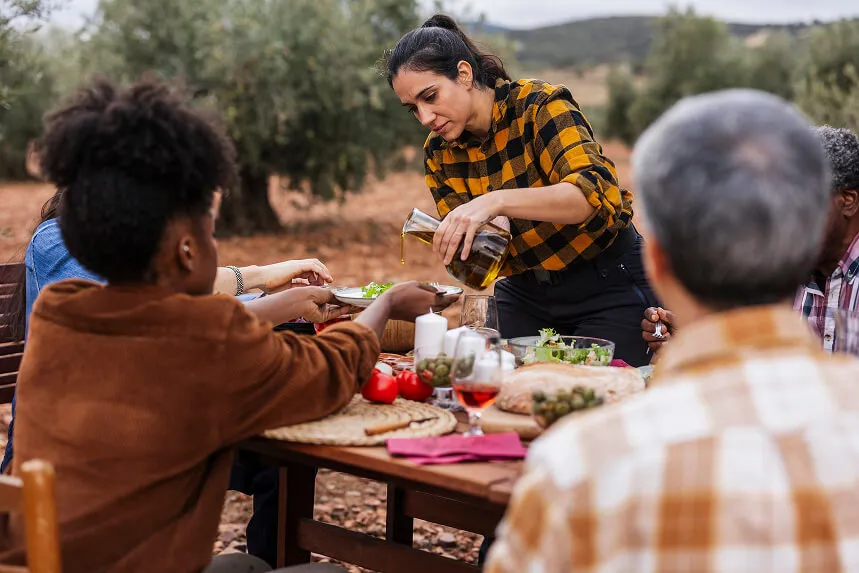




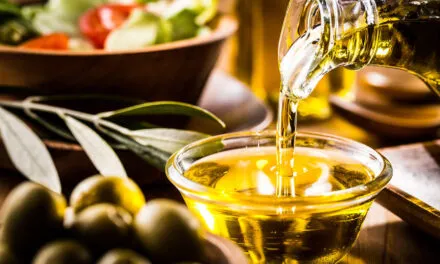











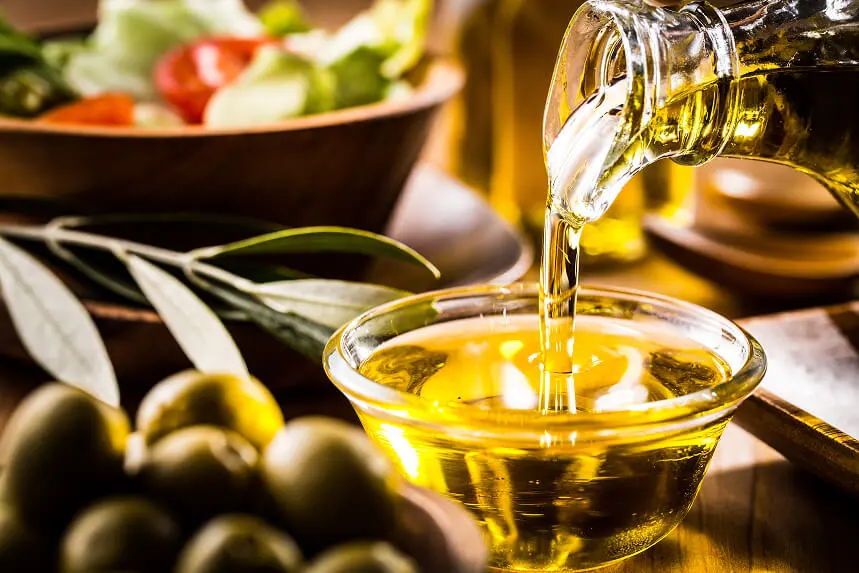
Few things survive translation across a world this scattered. And yet here it is, holding its place at every table that matters: pooled in the bread basket of an Italian trattoria, dressing a Horiatiki salad on a Santorini rooftop, threading through a plate of Spanish tapas, warming a bowl of Egyptian ful medames, sweetening a slice of Lebanese sfouf. Olive oil, somehow, is the one thing these tables have in common and the reason why starts long before anyone thought to bottle it.
Roots in the Levant
Botanists trace its wild origins to the Levant, somewhere between Syria and present-day Lebanon, close to six thousand years before anyone thought to call it a commodity. From there, it moved by ship rather than by chance. Phoenician traders carried cuttings and pressed oil out of Tyre and Sidon, planting the tree along the coasts of Greece, Sicily, and eventually the Iberian Peninsula.
The tree took to this new ground because the ground asked so little of it.
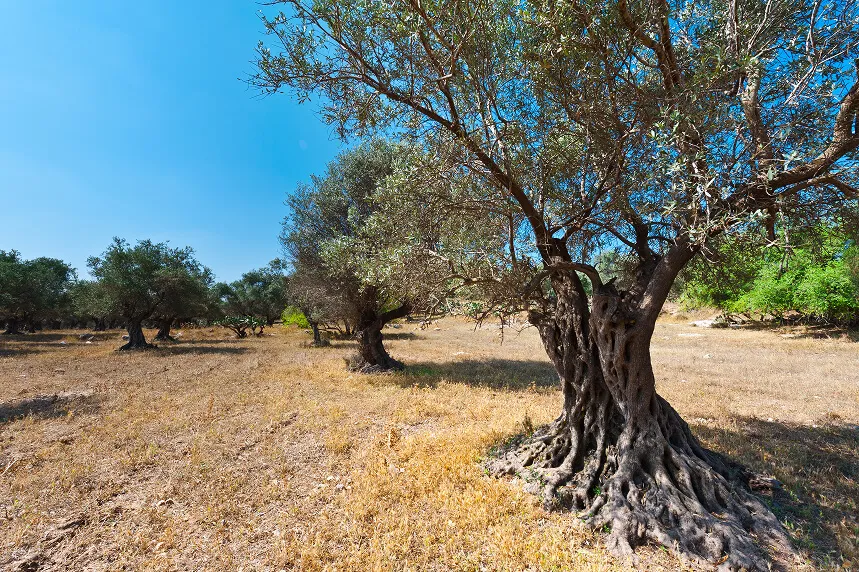
That is why the Mediterranean basin, rather than any single country within it, became the tree's true home — a coastline shaped as much by olive groves as by the sea itself. In Lebanon, that permanence still stands in the mountain village of Bchaaleh, where a stand of trees known locally as the Sisters has been growing, by most estimates, for six thousand years — long enough to have watched the Phoenicians, the Romans, and the Ottomans arrive and leave.
However the tree didn't just spread its roots as it traveled, but picked up meaning along the way, and each civilization it reached gave it a different one. In the Middle East, it came to represent peace and prosperity, woven into religious ceremonies and carried through art as a symbol of a good life. In Greece, it stood for wisdom and victory, crowning Olympic champions and appearing throughout philosophical texts as a mark of honor. In Italy, it took on associations with fertility and renewal, folded into wedding ceremonies and agricultural rituals meant to bless a harvest before it even began.
That symbolic weight never really faded; it just found new forms to move through, especially in spirituality. The Quran names the olive as a source of light. The Torah's dove returns from the flood carrying an olive branch, and peace has borrowed that image ever since. In the early Christian church, blessed oil (chrism) anointed the newly baptized, consecrated priests, and gave the words Christian and Christ their very root, drawn from the Greek term for one anointed with sacred oil. The tradition hasn't stayed in the past, either: in 2023, the oil used to anoint King Charles III at his coronation was harvested from groves on the Mount of Olives and blessed in Jerusalem, a modern ceremony still leaning on an ancient script. To pour oil over another person, across nearly every faith that touched this coastline, has meant something close to a benediction.
By the time that reverence had settled into ritual, the tree itself had already scattered across a dozen coastlines and it didn't grow the same way twice.
A Map Drawn by Terrain
Once the olive tree found its footing, it stopped being a curiosity and became a livelihood defined by identity. Entire regions built their economies, tables, and sense of place around it, and the oil that came out of each one carried the fingerprint of the land that grew it.
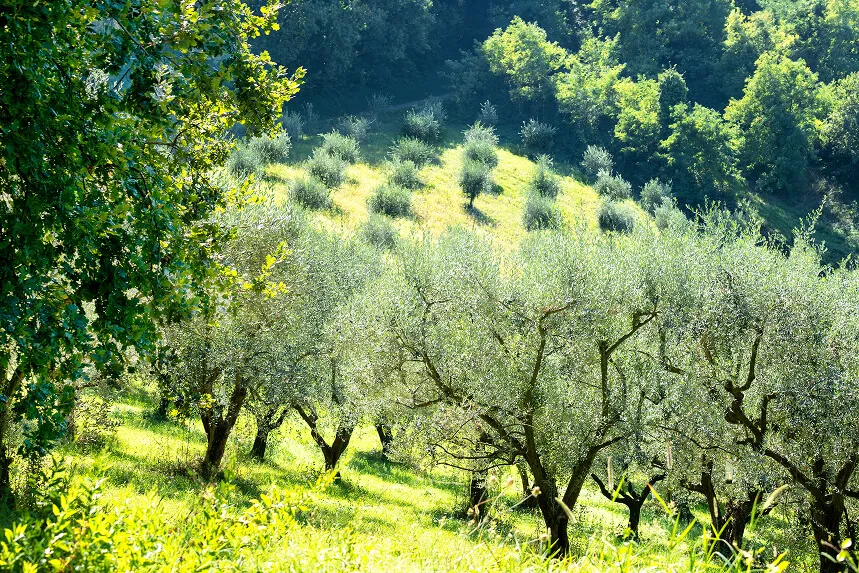
Spain took to it more completely than anywhere else, turning Andalusia's hills into the largest expanse of olive groves on the planet; the Picual olive grown there produces a bold, peppery oil built for intensity and staying power. Italy split its identity by region, its northern oils delicate and almond-scented, its southern ones bold, fruit-forward, and unmistakably robust. Greece leaned into the Koroneiki olive, sharp and green, an oil so central to daily life there that it's hard to separate the cuisine from it. Portugal's Alentejo groves took a softer path, favoring balance over intensity. Further west, California has spent the last few decades building its own reputation, its Arbequina and Mission olives yielding oils that are fresher and milder, still finding their place in a market long defined by the Mediterranean.
Within the MENA region, the story underneath it runs deeper. In Tunisia, where groves now stretch across nearly a third of the country, olive oil has been the difference between a family's survival and its ruin for generations, which is part of why it represents 40% of the country's agricultural exports. Morocco's Picholine olive yields a sharper, greener pressing shaped by Atlas terrain, the kind of oil that carries the taste of the mountains into a tagine. Lebanon's Souri variety, unlike anything else in the region, produces a fuller, more robust oil grown across limestone hillsides that have been terraced by hand for centuries, each harvest still gathered the way it always has been — without machinery, without hurry. Egypt's relationship with the oil reaches back to the embalmers of the pharaohs, who trusted it to preserve what a civilization considered irreplaceable. And in Saudi Arabia's Al-Jouf region, more than thirty million trees now grow across one of the largest organic olive orchards on earth, fed by ancient water reserves buried deep beneath sand once assumed incapable of growing anything at all.
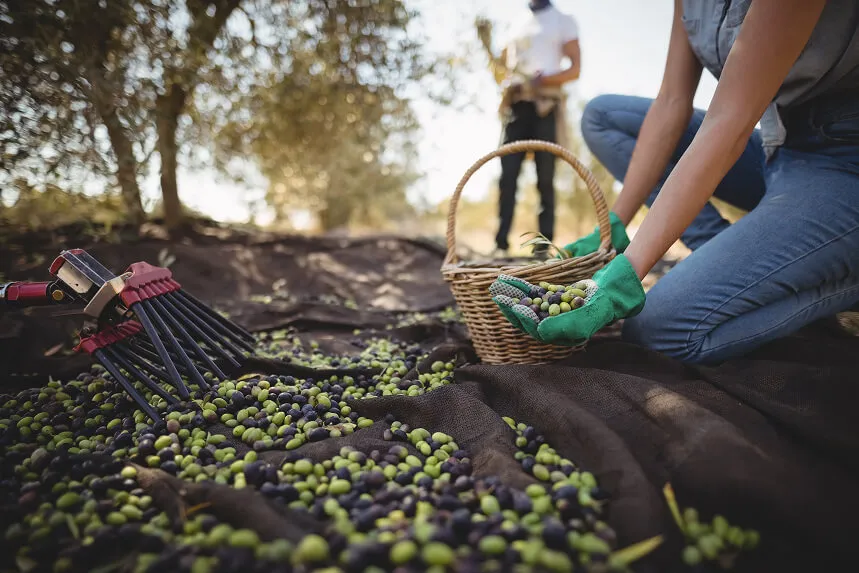
Behind all of that variation sits the same quiet fact: for families across this region, the olive tree has never just been agriculture, it's inheritance. In the West Bank alone, more than eighty thousand families depend on their groves for income, harvests planted by grandparents and handed down the way other families hand down land or a name. A tree can take a decade to bear its first real fruit, which means whoever plants it is rarely the one who profits from it first — they're planting for a child, or a grandchild, on faith that the tree will still be standing by the time it matters.
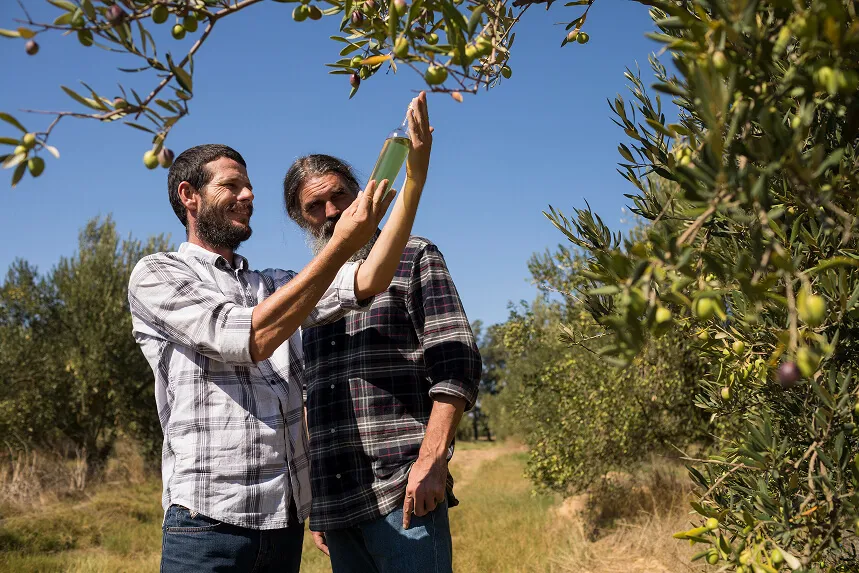
"Whoever plants it is rarely the one who profits from it first — they're planting for a child, or a grandchild."
Powerful Healer
These groves were trusted as medicine well ahead of being prized at the table. The Ebers Papyrus, an Egyptian medical text dating back roughly thirty-five hundred years, records olive oil ointments used to calm insect bites, soothe eye infections, and treat what would now be recognized as eczema. Centuries later, Avicenna devoted pages of the Canon of Medicine to its effects on digestion, joint pain, and what he described as a calming influence on a troubled mind. Across Syria, the oil was pressed into the hands of women hoping to conceive. In Tunisia and Algeria, healers worked it into the skin over broken bone, and in Morocco, mothers still stir it into honey to quiet a child's cough.
Modern medicine has since caught up with what these traditions understood by instinct. Rich in monounsaturated fat and polyphenols like oleocanthal, olive oil is now credited with lowering the risk of heart disease, easing inflammation, and protecting cells from oxidative damage — properties that place it at the center of the Mediterranean diet, a way of eating built around vegetables, grains, and this oil rather than animal fat. In 2010, UNESCO recognized the Mediterranean diet itself as part of humanity's Intangible Cultural Heritage, naming olive oil as one of its defining elements. During Ramadan, its role becomes almost liturgical for the same reasons, steadying the body through a long fast, easing digestion back into rhythm after sundown, doing what science now credits to antioxidants and what earlier generations simply called faith.
At the Table
In the kitchen, the oil stops being a symbol and becomes technique. A fruitier, milder pressing gets folded raw into a dip or drizzled over grilled meat, where its softness rounds off the dish. A sharper, more peppery one goes over a salad or finishes a plate at the last moment, letting its bitterness cut through richness rather than disappear into it. What makes it useful across so many dishes is what it does beneath the surface: warm spices like cumin and fresh herbs like mint and parsley aren't especially soluble on their own, and the oil acts as the medium that carries them, coating vegetables, grains, and proteins so that flavor reaches every bite instead of settling at the bottom of the pan. It also does something to texture that little else can — a plate of boiled greens or a bowl of hummus goes from plain to silken with nothing more than a drizzle.
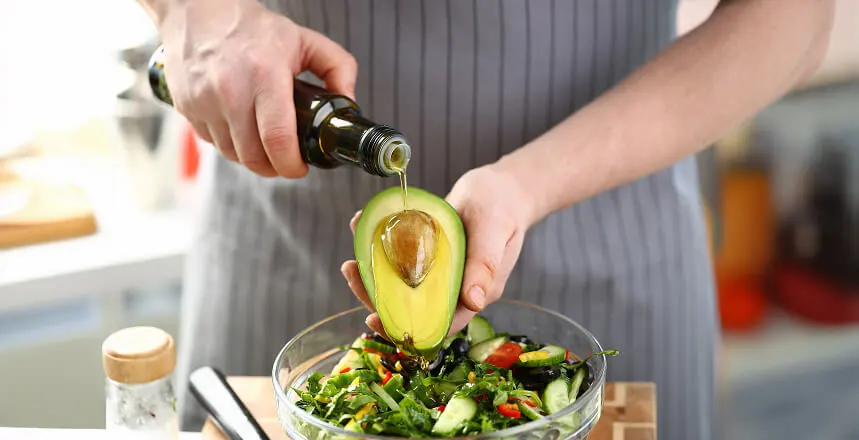
Its versatility extends to the stove as much as the table. Middle Eastern cooking leans heavily on grilling, roasting, and slow stewing, and the oil's high smoke point holds up through all of it without burning or turning bitter, while still being gentle enough to use raw as a finishing touch. That range is part of why it never gets replaced by anything else in this cuisine — one bottle carries a dish from the first sear to the last drizzle.
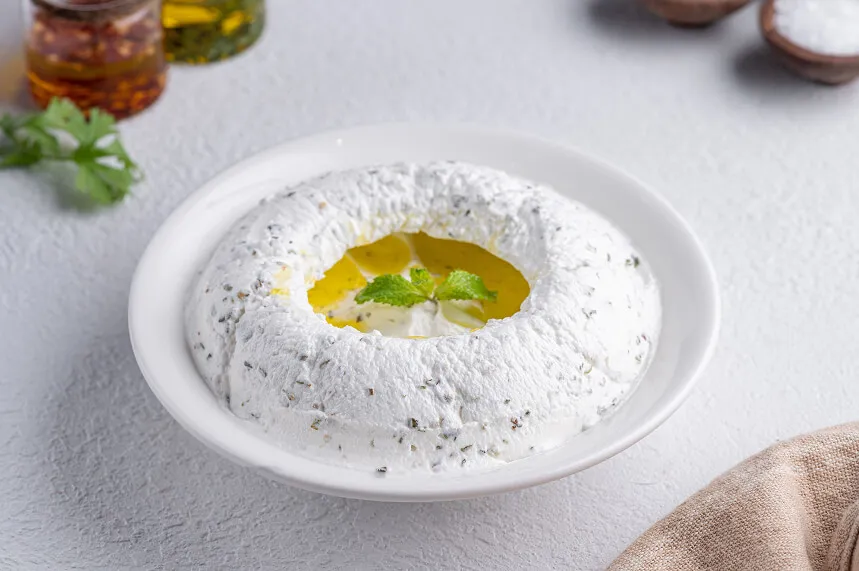
There is no hour in the kitchen that the olive oil doesn't reach. It opens the day in a glass of kefir, drizzled over the surface with za'atar scattered on top, sour and herbal before anything else has been cooked. The same base shifts with the morning — sometimes drunk straight, poured into a bowl for bread to be pulled through or thickened first so it can be spread rather than sipped. By midday the oil has moved on to heavier work, carrying flavor the way it does in every dish that follows it. The two recipes below carry that forward.
Recipe
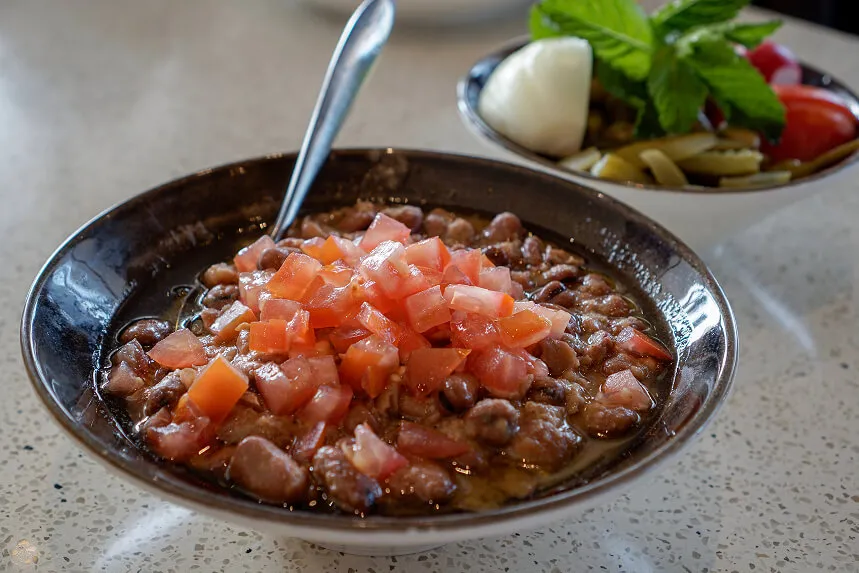
Ful Medames
Ful medames is a dish of dried fava beans, stewed until soft and lightly mashed. It's eaten throughout the Levant and the wider Middle East, and it moves easily between breakfast, lunch, and dinner. Extra-virgin olive oil is the one ingredient that isn't optional. Drizzled over the beans just before serving, it finishes the texture, giving the stew a smoothness the cooking alone doesn't produce, and a good-quality oil is what makes that finish work.
Ingredients
- 2 cups dried fava beans, in their skins
- 6 cups water, for soaking
- 5 cups water, for cooking
- ½ teaspoon baking soda
- ¼ cup fresh lemon juice
- ½ teaspoon ground cumin
- 8 garlic cloves, minced
- Salt, to taste
- Extra-virgin olive oil, for drizzling
- Cayenne pepper, optional
- To serve: diced tomatoes, sliced onions, mint sprigs, pickles, radishes, pita bread
Instructions
- Soak the beans in 6 cups of water with the baking soda for 15 to 20 hours. The longer soak softens the skins and rehydrates the beans fully.
- Rinse the beans under cold water and drain. Transfer to a medium pot, cover with 5 cups of water, and bring to a boil over high heat, skimming off the white foam as it rises.
- Cover and reduce to low heat. Cook for 2 to 3 hours, until the beans are tender and the liquid has thickened. Add ½ cup of boiling water if the pot dries out before the beans are done. The finished consistency should resemble a thick soup.
- Remove from heat. Stir in salt, lemon juice, cumin, and minced garlic.
- Mash the beans roughly with a mortar, leaving some texture. Transfer to a serving bowl and drizzle with olive oil.
- Top with diced tomatoes, sliced radishes, mint leaves, and pickles. Serve warm with pita bread.
Recipe
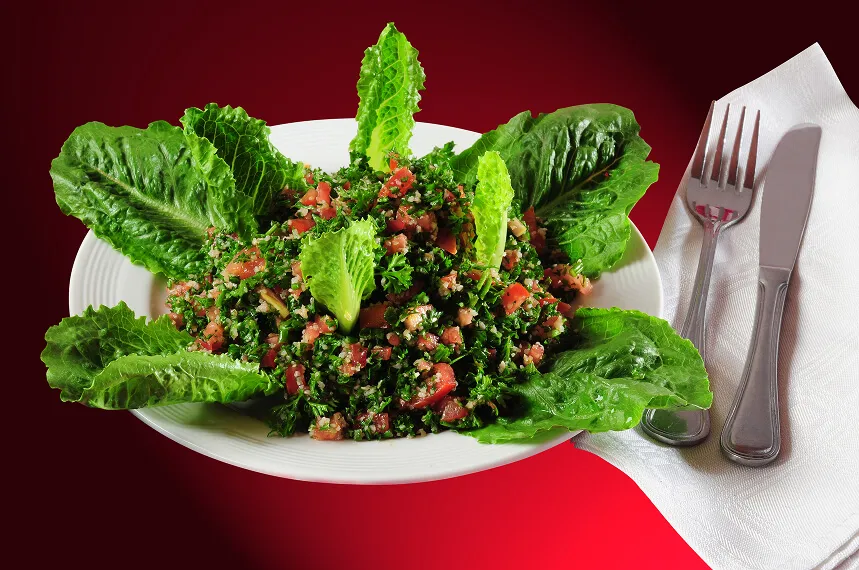
Tabbouleh
Tabbouleh is a lemony herb salad built mostly from parsley, with just enough bulgur to round it out. It's a staple of the mezze table across the Levant, especially in Lebanon, folded into sandwiches, or served alongside grilled meats, roasted vegetables and pita. Extra-virgin olive oil is essential to the dish. Poured generously over the parsley, it keeps the herbs from drying out as the salad sits, and it's what ties the lemon, tomato, and herbs into one bite.
Ingredients
- 3 large bunches parsley (about 6 cups), leaves only, finely chopped
- 5 medium tomatoes, finely diced
- 7 fresh mint leaves, finely chopped
- 1 medium white onion, finely chopped
- ½ cup extra-virgin olive oil
- ¼ cup fresh lemon juice
- 1 tablespoon fine bulgur (cracked wheat)
- Salt, to taste
- A dash of allspice or seven-spice blend
- To serve: romaine lettuce hearts or cabbage leaves
Instructions
- Pick over the parsley, discarding any imperfect leaves and all stems.
- Soak the parsley in salted water for 5 minutes, then rinse under cold running water and drain in a colander. Set aside until fully dry. Repeat with the mint leaves.
- Finely chop the parsley with a sharp knife, then finely chop the mint.
- Combine the parsley, tomatoes, mint, and onion in a large bowl.
- Add the lemon juice, bulgur, olive oil, salt, and spice blend. Mix well.
- Transfer to a serving dish and serve with optional leaves.
Production totals will keep shifting, with new regions entering the market, new techniques refining the yield, yet none of that changes the role the oil has always been asked to play. It has fed people through scarcity, healed what medicine once had no name for, opened doors before a word was exchanged, and marked the most sacred moments a life can hold. Every hand that has ever pressed it, from the Levant's first orchards to the deserts of Al-Jouf, was chasing the same instinct: to make something outlast the person who made it.
"To make something outlast the person who made it."