










The holidays have a funny way of revealing who we really are. You can try to keep things simple, “just turkey, just mashed potatoes, nothing fancy this year” and somehow you still end up pulling out spices your grandmother swore would cure everything from heartbreak to hiccups. Maybe you add a dash of rosewater, maybe your cousin brings cardamom coffee, maybe someone shows up with a tray of cookies that mysteriously vanishes before dinner… either way, heritage finds its way onto the table whether we plan for it or not.
That’s the magic of this season. No matter where we come from, our traditions follow us like the comforting smell of something baking in the oven. Even in the U.S., where everyone is blending cultures like a holiday smoothie, we still gravitate back to the flavors, stories, and rituals that shaped us.

Across Middle Eastern households—Levantine, Gulf, North African, Persian, Armenian, and the many cultures that intersect them—the holidays aren’t just dates on a calendar. They’re mini family history lessons disguised as delicious meals, endless storytelling, and gathering around tables that somehow always fit “one more person.”
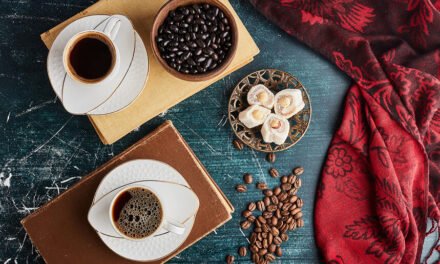
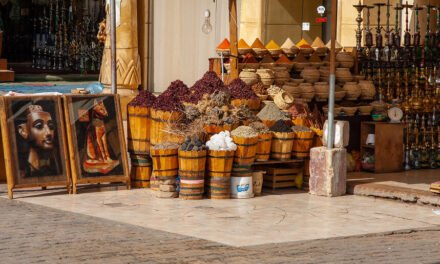
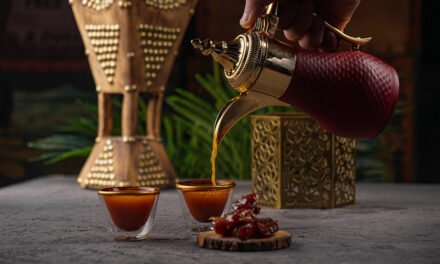
Levantine families warm their homes with maamoul, kibbeh, rice puddings, and trays of desserts that mysteriously seem to refill themselves (nobody has ever proven how). In the Gulf, winter hospitality turns into an art form—cardamom coffee for guests, sweets for everyone, and gatherings that stretch longer than the credits of a holiday movie. In North African homes, couscous, fragrant stews, and semolina cookies fill the air with nostalgia.

And then there are Persian friends bringing out pomegranates and poetry for Yalda Night, an evening so cozy and enchanting it should probably be sponsored by hygge. Their traditions might look different, but the feeling is the same: gathering around tables, sharing stories, and honoring the light during the year’s darkest night.
But here’s the best part: in the U.S., all these traditions cross paths.
You walk into a holiday gathering and suddenly the table looks like a passport. Saffron rice next to green bean casserole. Cookies from three continents. Coffee strong enough to wake your ancestors alongside peppermint hot chocolate that tastes like childhood. There might even be a Christmas tree decorated with Middle Eastern lanterns or ornaments hand-painted by kids who take great pride in mixing glitter with… well, more glitter.
If you’re part of the diaspora, this fusion becomes your signature holiday flavor. It’s a way of saying, “This is who we were, who we are, and who we’re becoming.” A little old, a little new. A blend of cultures, memories, and inside jokes that only your family understands.

And then there are the games, the great holiday equalizers.
Long before group chats and translation apps, our families had another secret weapon for bringing people together: board and card games.
The universal language? Friendly competition… and the absolute certainty that someone is definitely cheating.
Games like chess, backgammon (or nardi, depending on which aunt you ask), bingo (aka bingo, loteria) have done more for cultural bonding than most people realize. They are the unsung heroes of the holiday season.

You don’t have to speak the same language to understand the thrill of moving a chess piece, shaking dice in a backgammon cup, or yelling “Bingo!” like you just won a Grammy. Suddenly, grandparents who speak limited English are fully engaged, kids are learning rules passed down through generations, and everyone is speaking the same unspoken language: play, laugh, connect.
In many immigrant households, these games bridge the gap between old traditions and new environments. These moments matter because they keep families glued together. Through games, we learn patience, strategy, storytelling, humor, and how to gracefully lose to a relative who insists they “never play” yet somehow wins every time.
With details like crystal embellishments and luscious fabrics such as smooth suede, satin, and crepe de chine, these modern Manolos pair with everything from your tried-and-true little black dress to that knock-out special occasion gown.

That’s why heritage matters so much during this season.
Not because of the exact recipes.
Not because the table must look perfect.
But because traditions remind us where we started…
and give us something meaningful to pass forward.
If you’re part of the diaspora, this fusion becomes your signature holiday flavor. It’s a way of saying, “This is who we were, who we are, and who we’re becoming.” A little old, a little new. A blend of cultures, memories, and inside jokes that only your family understands.
Every dish tells a story.
Every ritual holds a memory.
Every gathering becomes a gentle reminder that culture isn’t something you leave behind when you move; it evolves with you, travels with you, and shows up exactly when you need it most.
So whether you’re celebrating Christmas, Yalda, New Year, or simply the joy of having people you love around a crowded, colorful table, one thing is certain:
Heritage always finds its way home for the holidays.
And honestly?
That might be the best gift of all.