












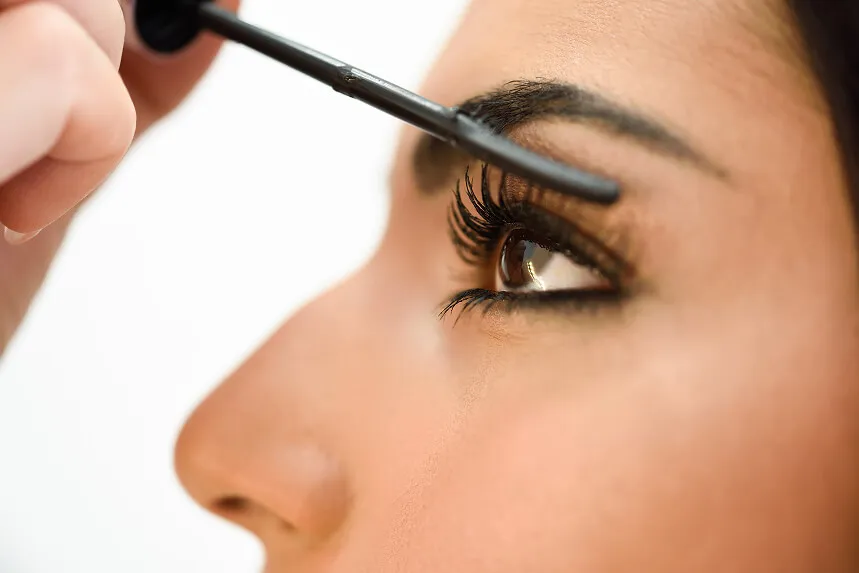
There is a particular kind of power that lives in the eyes. It is a force that women across the Arab world have understood for millennia, long before the global beauty industry caught up and the smoky eye became a trend report headline or a runway directive. In the Middle East, the eyes were never just a feature to be enhanced. They were the sentence, the punctuation, and the silence between words.
Ancient sculptures and reliefs from across the region centered the eye above all other features, incising and darkening them to communicate presence, divinity, and force. In ivory carvings, eyes were inlaid with dark pigments, the lids delineated as if perpetually outlined. This prioritization of the gaze is not merely aesthetic, but philosophical. In cultures where modesty and veiling have shaped social norms across different eras, the eyes became the primary vocabulary of self-expression — the one visible terrain through which a woman could communicate intelligence, beauty, feeling, and her roots.
Across the broader region — from the Arabian Peninsula to the Fertile Crescent, from the Nile Delta to the Levant — this relationship between the eye and identity deepened over centuries, carried through oral traditions, artistic forms, and the intimate rituals of women passing knowledge to daughters. In Arabic poetry, women are celebrated for their oyoun kaheela — kohl-rimmed eyes — as a marker of a particular, ineffable allure. Girls are sometimes nicknamed Kahla, meaning "the one who appears to always have kohl around her eyes."
Kohl: Five Thousand Years of Living Heritage
No single object better encapsulates this legacy than kohl, one of the oldest continuously used cosmetics in human history. Its earliest documented use traces back to ancient Egypt around 3100 BCE, where both green malachite and black galena were found in predynastic burial sites, placed alongside jewelry and pottery as essential possessions for the afterlife. Queen Hatshepsut lined her eyes with burnt frankincense. The celebrated bust of Nefertiti, with its wide, almond-shaped, darkly outlined eyes, remains a defining image of ancestral beauty ideals that still reverberates today.
What began in Egypt traveled. Through trade routes and migration, across Mesopotamia, Persia, the Arabian Peninsula, and North Africa, kohl became one of the most culturally durable substances in recorded history. Its ingredients evolved with geography: galena and antimony in some regions, soot and lampblack in others, date seeds among Emiratis, cedar honey and other organic materials in Lebanon.
The craft of making kohl is itself an act of cultural transmission. In Palestinian tradition, women soak pure cotton cloth in olive oil, place it beneath an aluminum pan, and let it burn slowly through the night. The resulting soot, accumulating in fine layers on the underside of the pan, is collected at dawn and stored in small ornate jars. Not any type of cloth can be used — the one available in markets, for example, contains nylon and chemicals, and the cloth used for kohl must be pure fabric. The process takes half an hour or more to fill a single jar — and within that half hour lives an entire inheritance.

Stored in decorative vessels called makhala, kohl containers have themselves become cultural artefacts. Emirati women had their kohl interred with them at burial. Among Bedouin men, the substance was carried in silver bullet-shaped containers, forms befitting both the masculine aesthetic and the practical demands of nomadic life.
The protective dimensions of kohl are inseparable from its elegant power. Traditionally, the pigment was applied beyond the waterline — beneath the lower lash and sometimes above the upper — to shield against sand and wind, ward off infection, and strengthen the eyes. In many communities across the Arab world, kohl was also applied to newborns for protection against the evil eye. Some Muslims regard wearing kohl as sunnah, in accordance with the Prophet Muhammad's own practice. In Bedouin communities, it marks rites of passage into adulthood, marital status, and tribal belonging. Kohl, across all these registers, is simultaneously cosmetic, medicinal, spiritual, and political.
In December 2025, UNESCO formally inscribed Arabic kohl on the Representative List of the Intangible Cultural Heritage of Humanity. The recognition matters precisely because of what it resists: the flattening of kohl into a generic "ethnic" cosmetic, stripped of context and sold back to the world without attribution. To name kohl as living heritage is to recenter the communities that have sustained it across generations — the women who prepare it, teach it, inherit it, and wear it every day.
The Arab Eye: Technique as Inheritance
The symbolism kohl carried through history left its mark on everything, including the way Arab women came to construct their vision of beauty. Flawless matte skin, sculpted features, and the warmth of a perfectly lined lip all have their place in the Arabic aesthetic. But what makes the look so distinctively compelling, so immediately recognizable, is the way it commands attention through the eyes. Not merely decorates them. Commands them.
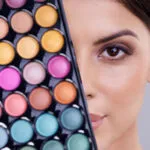
The foundational logic of the Arab eye is depth through dimension. Rich pigments — gold, bronze, copper, deep burgundy, midnight black — are layered and blended not simply to create shadow, but to give the impression of an eye that holds space, that reaches outward. Warm metallics anchor the center of the lid, deepening toward the outer corners, blending upward and outward toward the temples in a sweep that is as architectural as it is sensual.
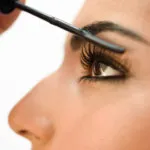
Eyeliner is not an afterthought in this tradition. It is the structure everything else is built around. A bold winged liner, extending outward and tilting slightly upward, elongates the eye and amplifies the drama of the shadow beneath it. The waterline, both upper and lower, is lined and smudged until the lashes appear to emerge from a depth of pigment rather than sitting above bare skin. It is here, in this specific and deliberate gesture, that the kohl tradition finds its most direct continuation.
Brows complete the frame. Thick, sculpted, precisely arched, they hold the drama without competing with it. The rest of the face follows the logic of counterbalance: luminous skin, carefully contoured planes, lips in warm nudes, mauves, or deep reds that anchor without overwhelming. Every element serves a single purpose — the primacy of the eye.
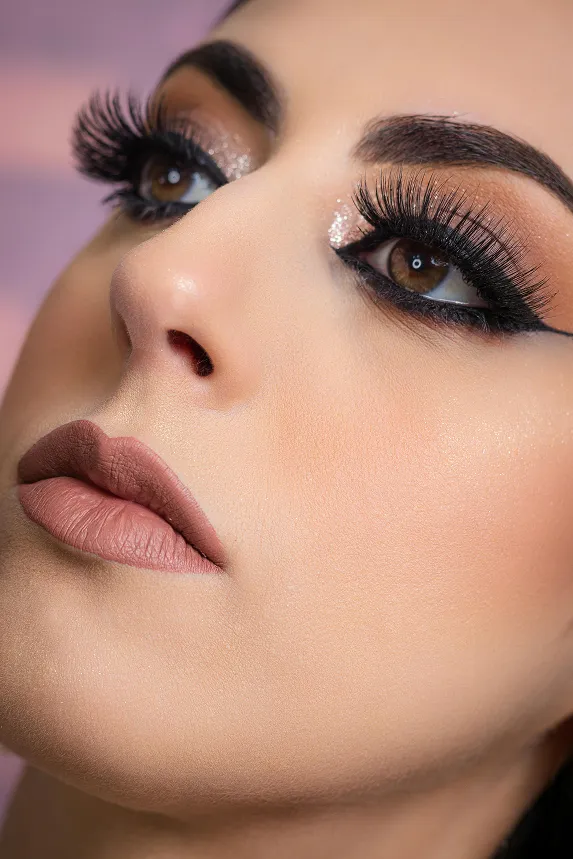
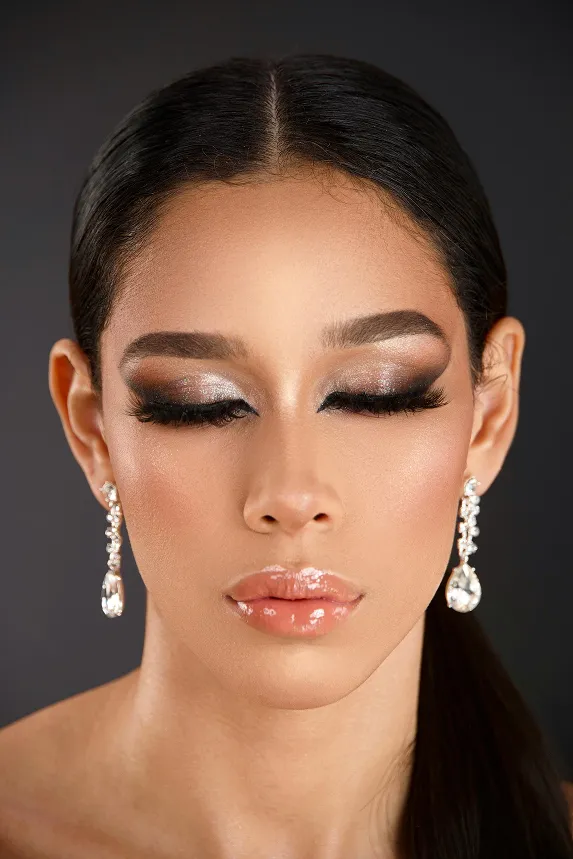
Over the past decade the look has evolved, though its essential character remains untouched. Heavy strip lashes have given way to wispy clusters that mimic extensions. The smoked eye, once built toward maximum density as a point of pride, now leans toward something more diffuse and lived-in, blended as if by memory rather than method. Women today want looks that lift the eye, work with its natural shape, and carry their intensity lightly. What has not changed is the commitment beneath it all: the eye remains the sentence the face is built to speak.
Summer Trends 2026 Are All Eyes
The timing, as it happens, could not be more resonant. Global beauty is in the midst of a dramatic reorientation, away from minimalism and toward something older, darker, and considerably more knowing. This summer, the dominant mood has shifted from soft and romantic to effortlessly cool and provocative. The "clean girl" aesthetic — the no-makeup makeup look, the barely-there lid, the performative neutrality — is ceding ground to something with more to say. When the cultural atmosphere feels uncertain, bold aesthetics tend to follow. People reach for beauty not as decoration but as declaration, as one of the most immediate and accessible ways to reclaim a sense of self.
Nowhere is that declaration more precise than at the waterline. This season, lining it has become the look's most decisive statement, described as discreet in effort and hyperdefinitive in effect. Applied heavily in full black along both the upper and lower rims, it sharpens the eye into something almost architectural: lashes appearing denser, the gaze more concentrated, the overall impression more unyielding. Elegant, precise, and deliberately arresting.
Metallic and reflective finishes are returning alongside the dark liner, with chrome and shimmer reimagined with a more refined edge, wearable and prismatic rather than disco-heavy. The smoky eye, too, is back, though quieter than its predecessors. Blurred, diffused, built with a smudged base and a precise baby wing at the outer corner — the juxtaposition of something grungy and something controlled.

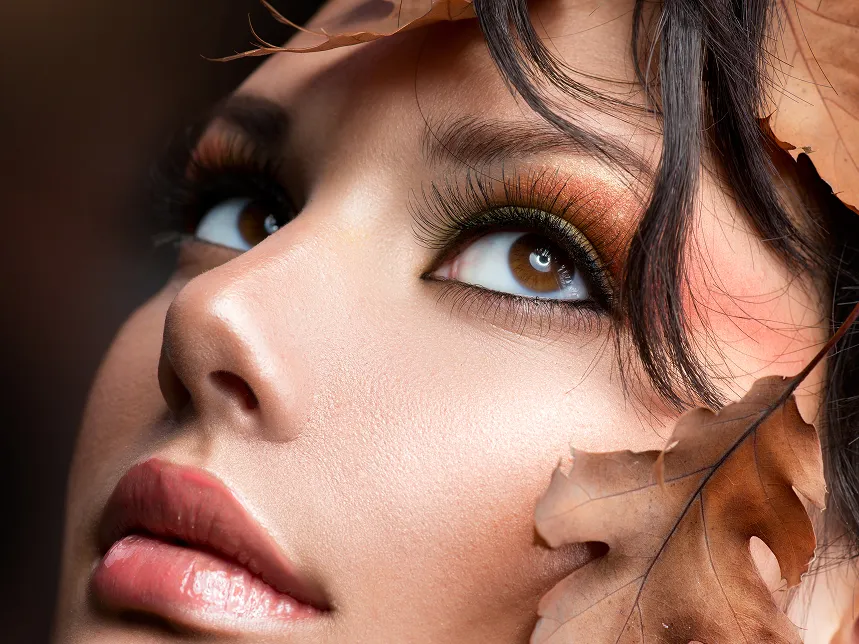
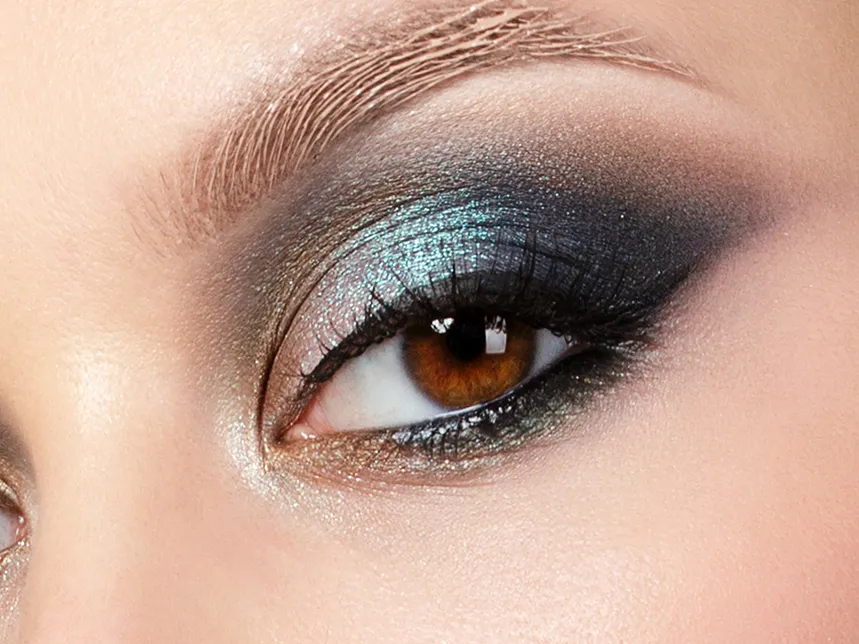
What is striking, for anyone who knows about Arab beauty tradition, is how familiar all of this feels. The darkened waterline, the smoked and extended lid, the drama held in careful balance with luminous skin are not new inventions. They are, in many respects, translations. The language was already there, written in kohl, practiced in households, bridal suites, and morning rituals across the Arab world for five thousand years. The global beauty industry has simply, finally, turned toward it.